

Attracting hummingbirds to your garden is a great way to add wildlife activity quite different from other birds. They are smaller, more nimble, and for some – much more entertaining to watch. A big part of attracting them is finding the best hummingbird feeder placement. This article will cover that very subject.
What is the Best Location for a Hummingbird Feeder?
I don’t know how many times I moved my hummingbird feeder around before finding the ideal location. What worked for me may not work for you, but there are general guidelines that you can follow to narrow down the best spot:
The best hummingbird feeder placement is 5 to 6 feet from the ground, 10 to 15 feet from cover, and where you can easily see and maintain the feeder.
This is general guidance, however. It’s worth digging deeper.
From the Hummingbird’s View
The hummingbird first needs to find the feeder. This shouldn’t be difficult. Hummingbirds have phenomenal vision. They can see colors we can’t even imagine. But you can make their job easier by placing it somewhere they can easily notice when they fly through. More on that in a bit, but there is a more important consideration for hummingbirds to visit a feeder.
The hummingbird needs to feel safe visiting your feeder.
I’m sometimes asked what the best height is to hang a hummingbird feeder. There is no height requirement for a hummingbird feeder as the birds are accustomed to hovering at flowers at varying heights from the ground. Observing birds in your garden, you will notice that hummingbirds will visit flowers at different heights.
Certainly, placing it at a height so they do not fall easy prey to cats on the ground is a good idea. However, you do not want to put it up so high that it is a chore to pull it down for routine filling and cleaning. Hanging the feeder 5 to 6 feet from the ground is good for both you and the bird.
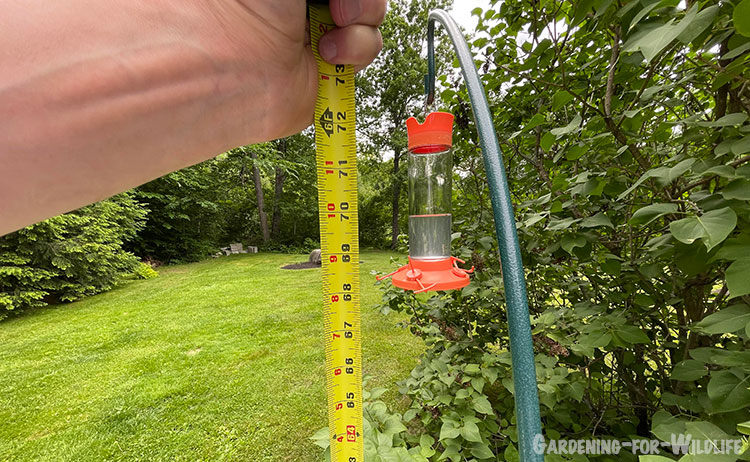
I used a clamp-on deck hook to hang my feeder. They are easy to attach, can be removed in winter, and off many decks, makes the feeder hit that 5 to 6 foot height mark.
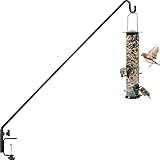
- MULTI-PURPOSE: Beautify your outdoor living space by hanging bird feeders, suet baskets, planters, flower pots, lanterns, holiday decorations, string lights, wind chimes, ornaments, and more!
- SMART DESIGN: Allows you to position your feeder or planter away from your deck to avoid a cluttered feel and enjoy more space. Seeds and bird droppings fall away from the deck preventing you from having to constantly cleanup messes. Easily refill feeders by simply loosening the swivel and turning the hook back towards your deck. 49 inch (1.24 m) long pole makes it difficult for squirrels to reach the bird seeds.

Another consideration is cover for the birds near the feeder. Placing a hummingbird feeder within 10 to 15 feet of trees or shrubs gives them a place to rest when they are not on the feeder. This allows them to conserve energy and provides protection from predators and being out in the open.
From Your View
You have to maintain a hummingbird feeder, so place it where you can easily access the feeder for refilling and cleaning. You will be refilling that feeder often if you are lucky, so make it easy to access and reach.
Placing it deep in a flower bed will make it harder to access. Also, make sure the space underneath the feeder will allow for drippings. The sugar water can, and often will, attract ants.
Should a Hummingbird Feeder Be in the Sun Or Shade?
Placing a feeder in full sun all day, or in full sun during the heat of the afternoon, can cause the food to heat up and spoil more quickly. This can make the food go bad and require you to change it more often. You will also need to clean it more regularly to ensure mold does not begin to grow.
If you are using a feeder with plastic parts, the intense sun can, over time, cause the plastic to crack. This can cause cracks that would allow food to leak out. Not only does this waste your hummingbird food, but it can also create a messy, sticky area that attracts insects such as ants or bees and wasps.

- NECTAR CAPACITY: Holds 10 fluid ounces of hummingbird nectar
- FEEDING PORTS: Features four flower-shaped feeding ports to accommodate multiple hummingbirds
A tidy hummingbird feeder has a better chance of attracting the birds you want to see and offer those birds a healthy food option.
I place one feeder in the dappled light hanging under a tree in my yard. Since the apple tree is pruned to stretch out horizontally, the feeder hangs below and is fully accessible from all sides. Hummingbirds have a clear line of sight to the feeder. My other plastic feeder pictured above is off my deck and it gets a lot of direct sun most of the day making it fade after a few years.
How Far Should a Hummingbird Feeder Be from the House?
Most experts recommend placing a feeder a minimum of 10 feet from your house, and ideally 30 feet away. The main reason has to do with protecting these birds from striking your windows. While your windows allow you to watch the birds you’ve worked so hard to attract, that same window can be problematic – even deadly.
Up to one billion birds are killed each year from collisions to windows. Granted, most of those deaths are not from home windows, but many are, and any serious birder can attest to the dreaded “thump” you hear when a bird smashes into your window.
Windows reflect sky and vegetation, appearing as a perfectly viable route and continuation of outdoor space. Therefore, it is advisable to place bird feeders away from windows, i.e. your house, in order to minimize the danger to them. Take steps to prevent window collisions if it’s a recurring problem for you.
My Case Example
The hummingbird feeder off our deck breaks much of the advice I have given you here, but as I said from the outset, what works for me may not work for you.
Look at the picture below and you will see that the hummingbird feeder placement is questionable. It is exceptionally close to both the lilac bush and the house.
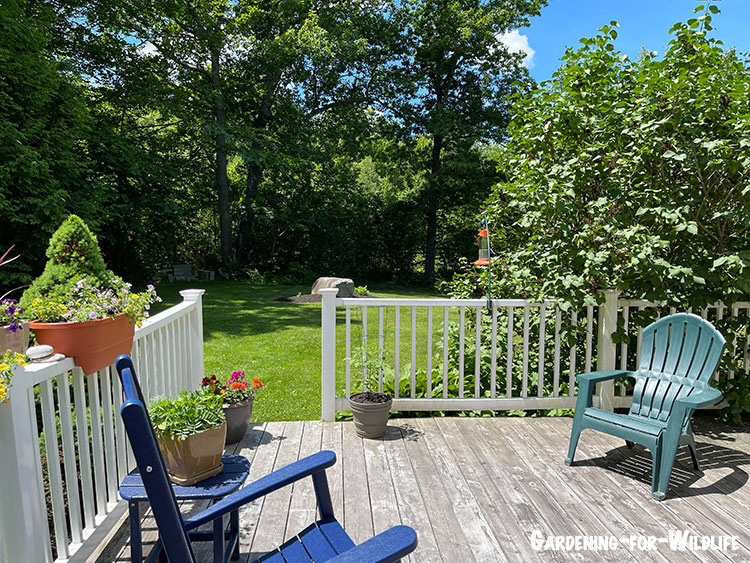
However, it works. Hummingbirds visit it all day long. The lilac bush is too thick for most predators. In fact, our chickadees and sparrows use it as cover from the neighbor’s cat and hawks overhead. That same bush also reduces reflection on our house window making collisions rare.
Best of all, we can easily maintain it right from the deck, drippings fall onto the ground, and we can sit on the deck with hummingbirds flying around us.
FAQs
When do You Put a Hummingbird Feeder Out?
For most of the country, hummingbirds are migratory birds that arrive in the spring as weather warms in your area. Put your hummingbird feeders out about two weeks before they are normally expected in your area to attract the early arrivals.
Do Hummingbirds Migrate?
Yes, they do. Hummingbirds prefer warmer weather as that is when they can find food sources such as nectar and insects. Competition can be intense for food in the tropics. Traveling north and spreading out to the larger continental U.S. where food and space are more abundant.
When Will Hummingbirds Arrive in My Area?
While hummingbirds can be found year-round in a few locations around the country, such as Arizona and southern Florida, many of us eagerly await their return in the spring. Learning when they arrive in your area in spring can help you determine when to put out your feeders.
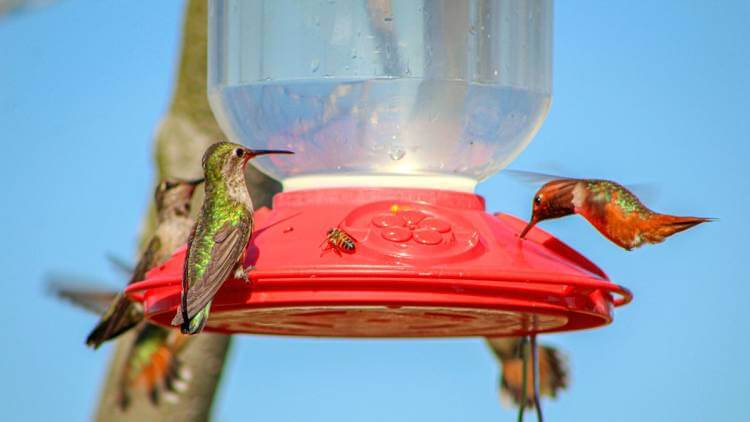
Generally, hummingbirds arrive in the southern U.S. states in February and March, the central latitudes in March and April, and the northern states in April or May. In Canada, this extends a bit longer, with hummingbirds arriving in May to June.
Of course, not every year follows a precise pattern of seasons. Spring can arrive early or late. Ahead of hummingbirds’ typical arrival time in my neck of the woods, I start watching for clues. If trees are starting to bud and my bulbs of crocus and narcissus start putting out leaves, I get my feeder out of the basement to clean it up.
I also keep an ear, or eye, to birding news south of me. If birders in states a few hours south of me begin to see hummingbirds, I know they are on their way. I don’t wait to see the first hummingbirds in my area. I go ahead and get my feeder hung and filled, even if just halfway, to meet the early arrivals.
Just like the saying, the earliest bird gets the worm, it is helpful to think the earliest bird feeders out attract the birds. Feeders still need to be kept clean and food replaced on a schedule so it doesn’t spoil and stays fresh. Consider it your pre-season warm up. The benefit is that if there are early arrivals, they will recognize you’ve rolled out the red carpet.
How Do You Attract Hummingbirds to a New Feeder?
Hummingbirds, like all other animals, need some basic things to survive. That includes food, water, and shelter. If you provide four-star accommodations and amenities in the form of plants, feeders, a water source, and areas to perch and rest, you won’t have any vacancies all summer, so to speak.
What Flowers Do Hummingbirds Like?
In addition to hanging hummingbird feeders, consider planting flowers that will not just attract the birds but provide them a natural nectar food source. Plants also attract other insects such as small flies and spiders which make up the protein side of a hummingbird’s balanced diet. If you live in an apartment or townhome without much outdoor space, even a window box, ceramic pot, or hanging basket is ample size for a small planting.
Flowers that are fully or partially red seem to be on their list of favorites, as well as tubular flowers. In my own garden, I have planted Anise Hyssop, Salvias, and Cardinal Flower. I’m already planning for next year by starting some Bee Balm and Maltese Cross from seed for blooms next year. I also have a side yard I keep in a natural, untouched state, allowing a variety of native plants to grow including Columbine.
Contact a local Audubon group or plant nursery and ask what the best plants to cultivate in your area. Groupings of the same plant, a variety of bright colors, and making sure something is blooming all the time are great strategies to give hummingbirds an attractive palette of food sources.
What Are Good Water Sources for Hummingbirds?
Two years ago, I added a bird bath to my yard. My neighbors also have a bath with a small, solar-powered fountain in it, which I have my eye on. The sound and movement of water is known to be more of an attraction to all birds, including hummingbirds. Might be time to add one to my own bird bath which will also keep the water moving and cut down on any mosquito larvae.
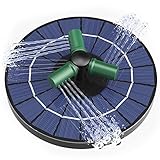
- ROTARY WATER SPRAY: Newest spray heads have been added to prevent water spraying to the outside of the container and empty the water quickly, new rotary water spray desgin makes your garden definitely catch all the attention of the passers-by. Let your yard look so amusingly decorated by the solar water fountain.
- MORE EFFICENT SOLAR PANELS: This solar water pump features an upgraded 4.5W polycrystalline silicon solar panel, transform stronger power to make water spray more stable and lasting. Place solar bird bath fountain pump into water and work automatically in 3s once exposed in sun.
A good friend in Texas decided to put a small pond in their backyard. Since they rarely need to worry about freezing temperatures, they have noticed a lot more of all kinds of birds and wildlife in their yard. While they went low tech and use a hose to fill it with a solar fountain to move water, you can go hi tech and design it with a recirculating system.
Do Hummingbirds Ever Rest?

Indeed, they do rest and places of cover around your house give them a safe place to do so. After a busy day of feeding from as many as 1,000 to 2,000 flowers each day, hummingbirds are generally inactive for about 12 hours every night, going into a state of torpor. Trees and shrubs in or near your hummingbird feeder provide resting perches, cover from predators, and places to build their nests.
On this latter point, if you’d like to encourage hummingbirds to set up housekeeping near you, consider having the types of soft materials available that they will use for their nests. Letting a few dandelions go to seed (yes, you read that right) means there will be white, fluffy tufts with which to line their nests. Other plants that offer soft fibers are pussy willow and thistle.
Hummingbirds also attach lichens to their nests for camouflage so leaving a few stumps around where lichens grow can benefit the hummingbirds you’ve worked to attract. And while you may not be a fan of spiders, not only do hummingbirds eat them but they use the spider webbing as construction adhesive for their nests.
How Do You Make a Hummingbird Habitat?
If you are getting the idea that I’m pitching a holistic approach to attract hummingbirds to a new feeder, you are right. Your hummingbird feeder is really one part of the overall support system that will keep these birds healthy, thriving, and coming back year after year to your yard.
Keeping your outdoor space free of pesticides and chemicals is also important to mention. Hummingbirds feed on a substantial number of insects and spiders for their diet. Any pesticides you put out into your yard can be reduce this food source or be consumed by your hard-won hummingbird visitors, affecting their overall health. Using a bubbler to keep water moving or adding fish to a pond can inhibit mosquito larvae growth without the need for chemicals and additives.