
Downy Woodpecker
Picoides pubescens)
The Downy Woodpecker:
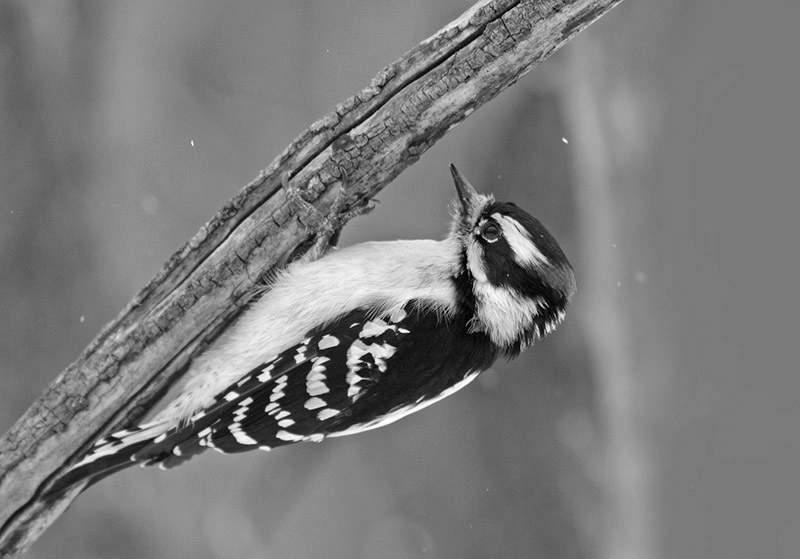
The smallest of our woodpeckers. Regarding 6-7 inches long and about 2 inches much shorter than the look-alike Hirsute woodpecker.
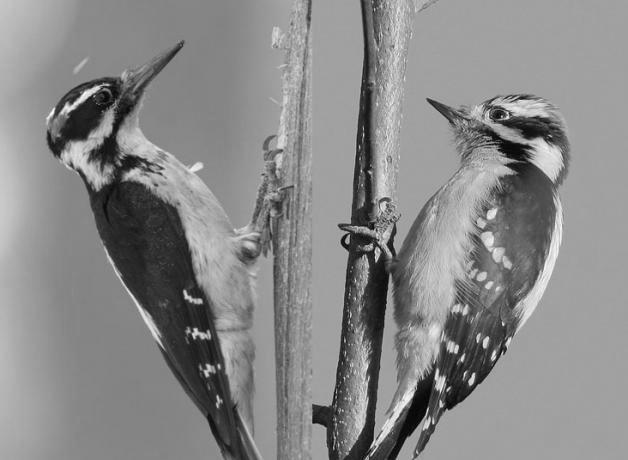
With a white back and white underparts its black wings are white spotted as well as it has a black-and-white-streaked face. The men have red on the nape as well as ladies do not.
You’ll locate these birds in open timberlands, orchards, parks, as well as yards.
Feeding Habits:
Woodpeckers feed upon pests in the wild. Specifically wood-boring bugs. Additionally berries as well as seed.
You can attract these tree climbing birds to your bird feeding stations if you supply suet for them. They are really keen on peanut butter, peanuts as well as other nut meats and also delight in sunflower seeds as well
By including a suet feeder, you’ll have the ability to obtain a close sight of these birds. Furthermore, you’ll get various other bird visitors like Nuthatches and Tufted titmice.
Mating Routines:
Downy woodpeckers mate forever as well as begin showing love in late winter months.
Unlike various other birds, they aren’t real social. You hardly ever see more than 2 to 4 woodpeckers at once.
Throughout the breeding season the Downy and various other woodpecker types do drumming.
A loud, constant, extremely rapid pecking on resonant surface areas such as dead trees, metal and even on houses.
This is done to introduce region and to attract a friend during reproducing period.
Nesting Routines:
The male starts excavating its nest tooth cavity in dead wood regarding 5-50 feet above ground. When he has a good sized opening going, the female places the complements to the new nesting sight.

What is a bit interesting is, the Downy will certainly let the timber chips and shavings go down to the ground and the Women Downy will take the wood chips and also drop them else where as to not promote a nest view for predators.
Although they occasionally makes use of synthetic nest boxes, they generally prefer to nest in trees.
The women Downy woodpecker lays 4-5 white eggs which are bred by both male and also women for about 12 days.The young will certainly leave the nest concerning 28-30 days after hatching.
southerly states they might elevate 2 broods each season.
After they fledge, the moms and dads will certainly often bring their children to your feeders.
You can inform the young aside from the grownups by the bright white on the feathers.
Until autumn molt, the adult white is used and also filthy looking.
The fledglings will molt as well as well as the man will certainly have his red cap.
A Lot More Usual Profiles
Downy Woodpeckers Enjoy Peanuts
Suet for Your Birds
Create Habitats to Draw Birds
Trees for Food as well as Sanctuary
Water for Your Birds and also Wildlife
Share Your Passions Online, SBI Shows You Just How
Customized Look
Enjoy even more of God’s animals.
Gardening For animals’ r will certainly help you.
Enter your E-mail Address
Enter your First (optional)
Then
‘t fear— your e-mail address is totally safe.
I assure to utilize it just to send you Horticulture For Wildlife.
( C) Copyright Gardening-For-Wildlife. com 2006 —— 2019 SBI!