
-Throated Hummingbird
a Profile
-throated Hummingbird
(Lampornis clemenciae)
-throated Hummingbirds are the Largest of ’s hummers.
The 5 inch giants occupy a few small sections in tn the mountains of southeastern Arizona, in southwestern Mexico and a separate population in the Chisos mountains of Texas.
After the breeding season, virtually the entire population returns to Mexico for the winter.
Throughout their range, they prefer moist canyons at high elevations with open woodlands of pine and oak.
-throated hummingbirds return to their breeding grounds in early spring when nesting gets under way.
Size alone, give them an edge over most other hummers, but that isn’t enough. Observations in Arizona have seen -throated hummingbirds waiting in ambush for -chins and Broad-tail, much like the school yard bully.
Male -throats establish and defend their territory against intruders, especially other hummers.
During display flights, males fan their blackish tails, clearly showing the white tips.
They also deliver a high pitched squeaky «Seek» sound as a song or call.
Some things haven’t been studied enough to fully understand.
The female hummer chooses a separate territory from the male, which stays at somewhat higher elevations, where wild flowers are more abundant.
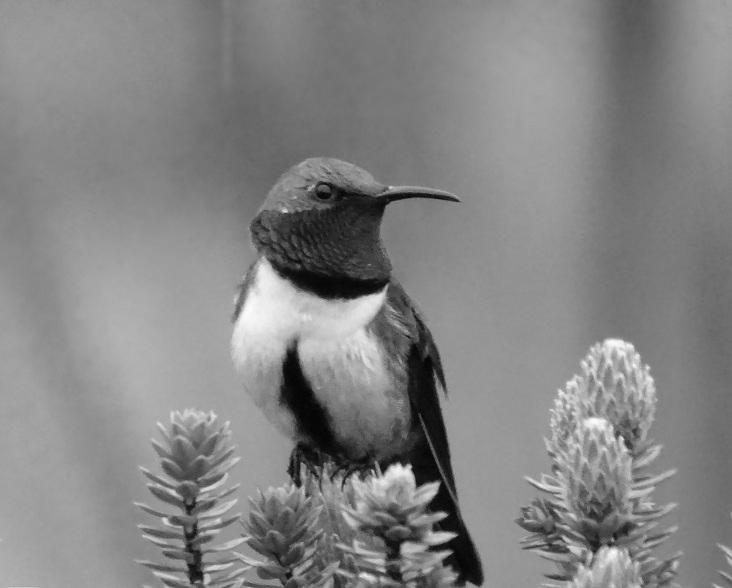
Nesting areas are usually wooded canyons near streams.
The nest is made in almost any location with overhead shelter is available. This includes under bridges, eaves, inside and outside of man made structures.
It also includes under tree limbs and branches, under rock cliffs that protect from the elements and predators and just about any place that suits her fancy.
Nests are large for that of a hummingbird and is composed of coarse straw, catkins, weeds, mosses and cobwebs.
The inner nest is lined with plant down and mosses.
Up to 3 inches wide and 2 — 1/2 inches deep, it is held together with spider silk.
Like all other hummingbirds, mama -throat does all the work while he seeks out other ladies.
As many as three clutches of 2 tiny eggs can span over the breeding season and she is busy rearing young often into October.
As soon as the last brood can fend for themselves, it is of the border time for the tiny giants.
Similar species:
The male is uunmistakable Female is similar to female Magnificent Hummingbird but has large white tips to tail and white malar streak.
Other hummingbirds are much smaller.
Length: 5.25 inches
, thin bill
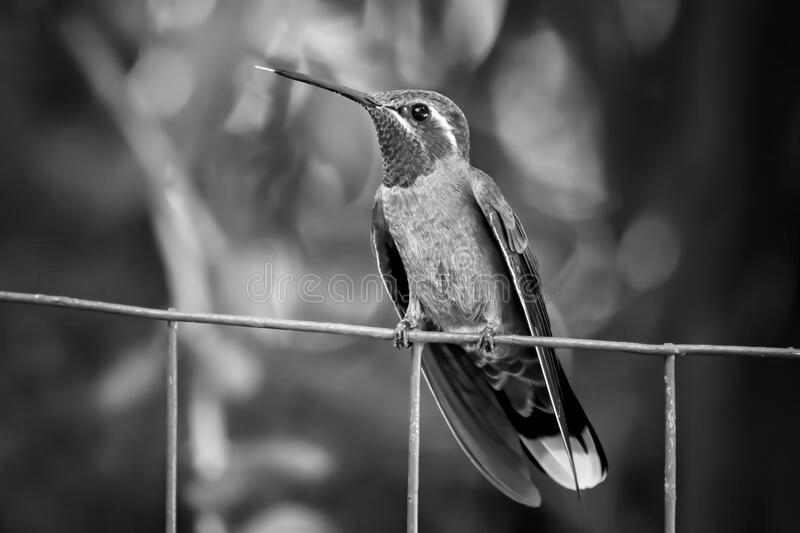
Large hummingbird
stripe behind eye
malar streak
upperparts
Grayish underparts
, rounded tail with broad white tips
United States ranged restricted to southeastern Arizona, southwestern Mexico and west Texas. Stray elsewhere.
Adult male:
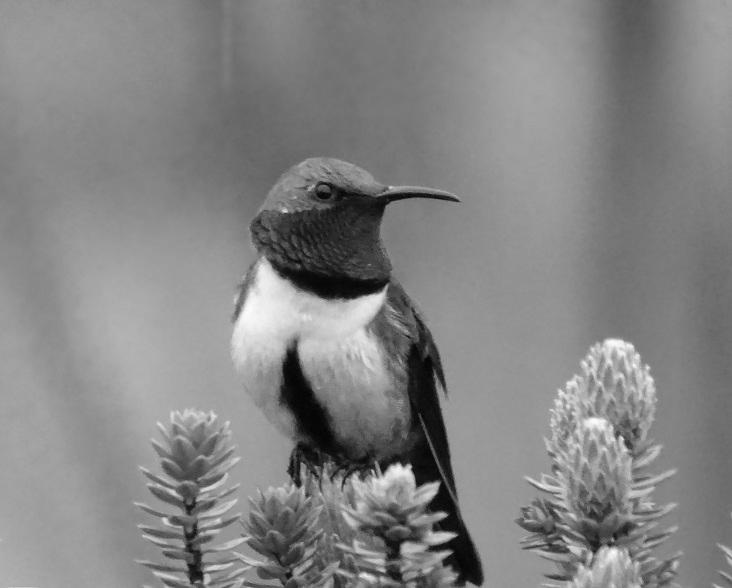
throat (black in poor light)
Migration Status: distance migrant
Breeding Habitat: Woodland
Clutch Size: 2
Length of Incubation: 17-18 days
Days to Fledge: 24-29
Number of Broods: 1 to as many as 3
Diet:
Exclusively:
Nectar
Insects
Unfortunatly, I have not found a decent range map.
the top of -throated hummingbird profile
Return to species profiles
Hummingbird main page
Hummingbirds Mating
Hummingbird Feeders
Hummingbird Gardens
Hummingbird
Migration
Migration
Gardening For Wildlife Home
Enter your search terms Submit search form
Web
gardening-for-wildlife.com
Enter your E-mail Address
Enter your First (optional)
Then
’t worry — your e-mail address is totally secure.
I promise to use it only to send you Gardening For Wildlife.